Agentic AI Navigation
Agentic AI app design and development transforming how users interact with complex applications at scale increasing navigation efficiency by 15%
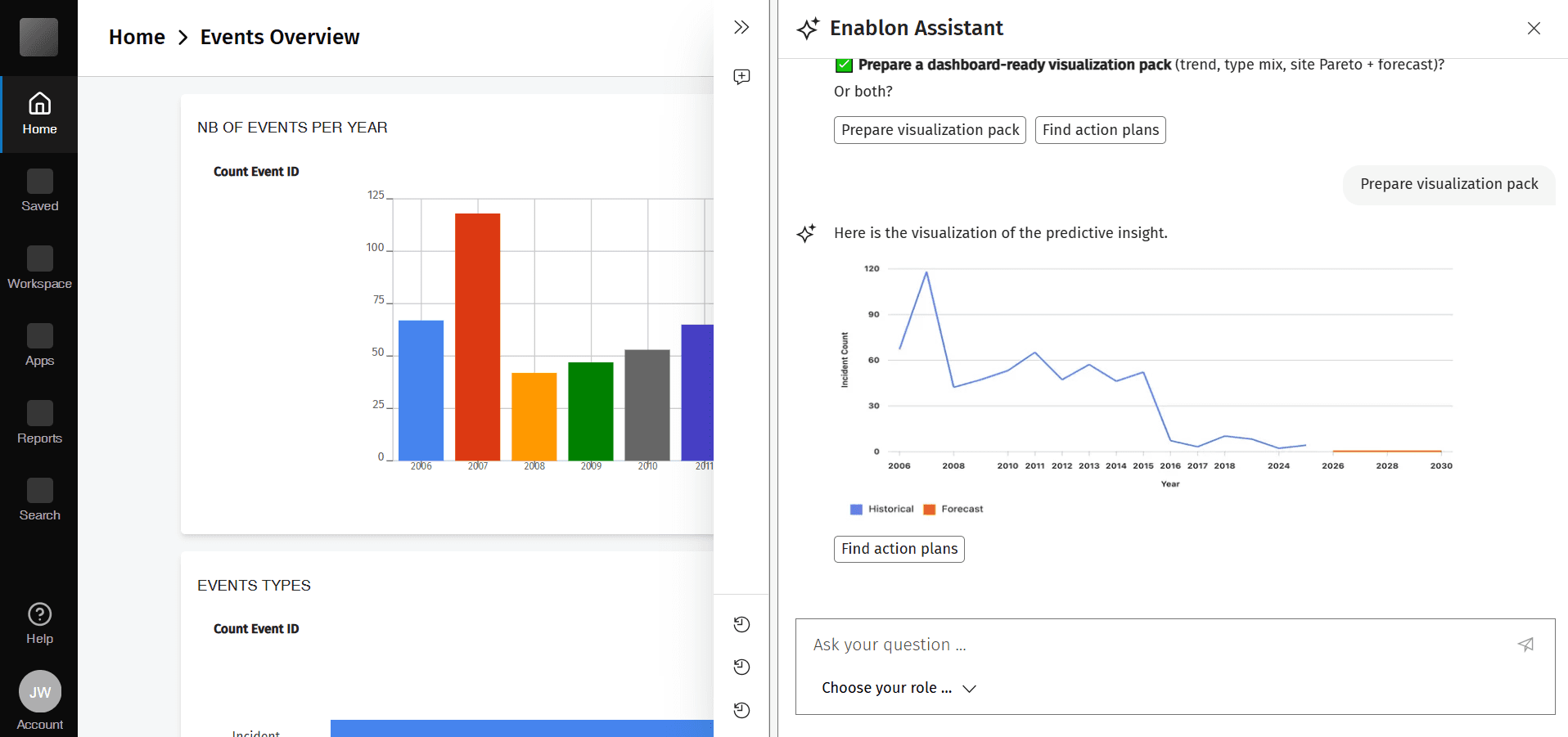
Led the development of an agentic AI assistant to replace traditional navigation with a conversational interface - transforming how users interact with complex EHS software.

Challenges
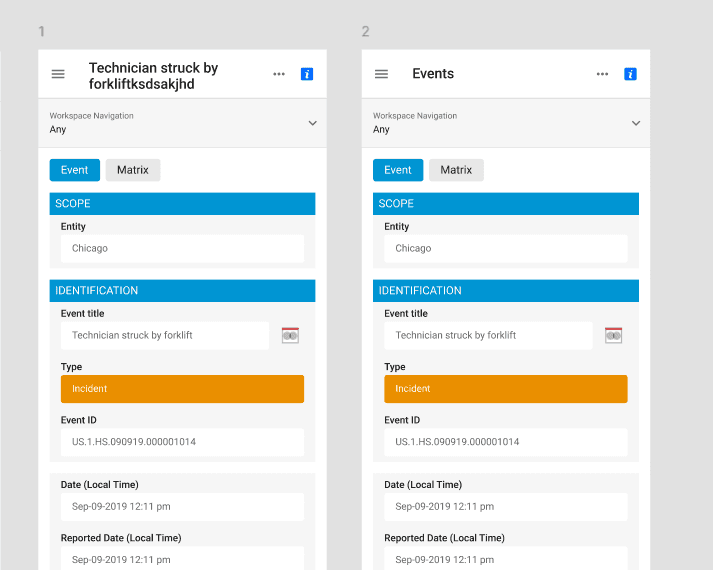
Outdated interface on the current platform
Complex navigation through menu structures
Cognitive load on users struggled to remember specific features
User Conflict: Field operators needed rapid, mobile access; EHS managers required deep, accurate reporting.
Opportunity
From Menus to Conversation
Key Insight: What if users could simply tell the system what they want to do, rather than hunting through menus?
Rather than incremental redesign, we saw an opportunity to leverage emerging AI capabilities to fundamentally transform user interaction — replacing point-and-click friction with natural language intent.
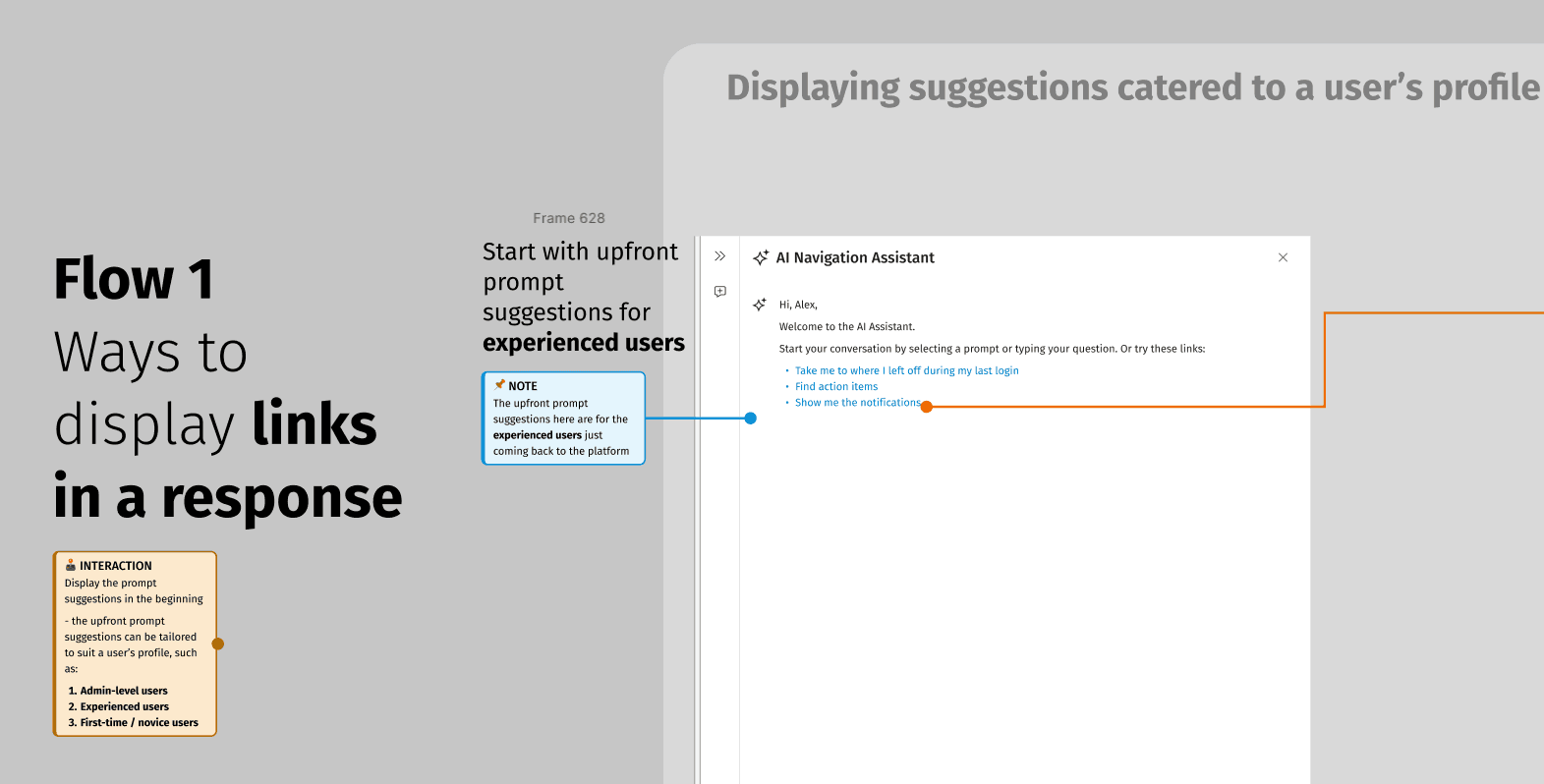
Exploring ways to display links in AI response
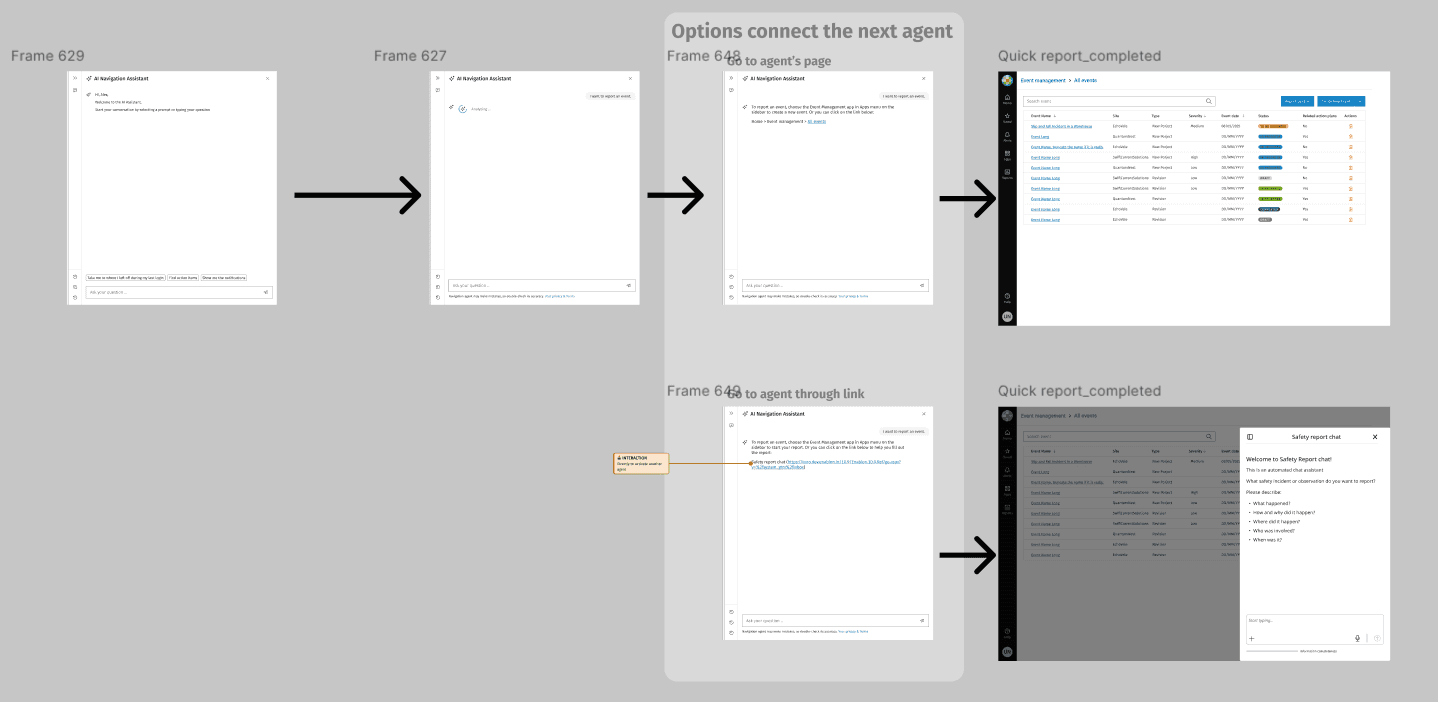
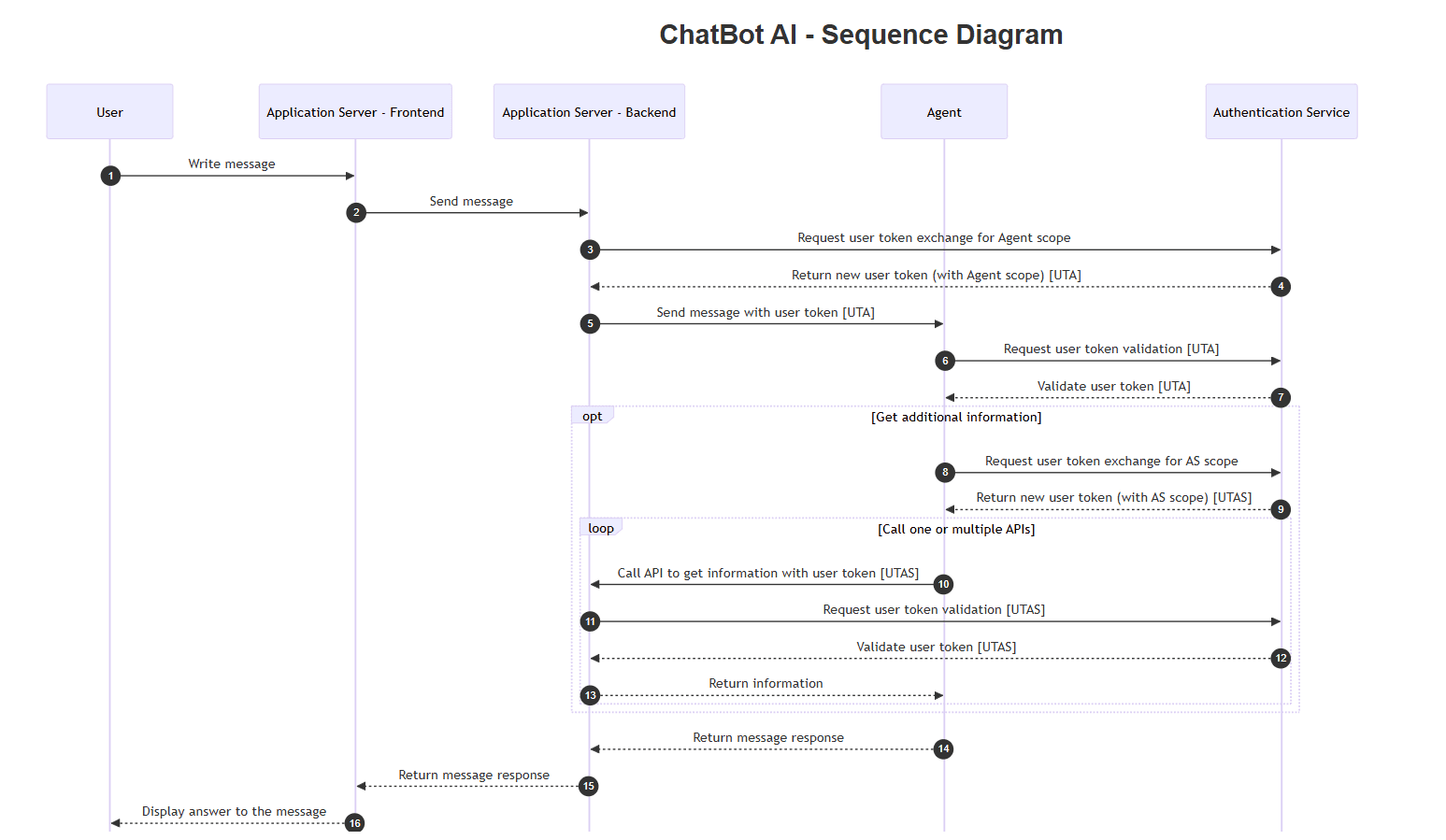
User flow for orchestrator to connect with another agent
Using AI multimodal prompting alongside imported Figma design frames and design system components
iterated between the prompt tool and visual editor
rapidly prototype solutions and explore concepts

Design Research & Strategy
Understanding AI UX in 2026
Current state of AI interfaces
learning from leading sources of AI UX design, such as:
- Salesforce Lightning design system 2
- Shape of AI
- Google People + AI GuidebookAI capabilities and limitations
- hallucination
- explainable AI, ethical and privacy issues
Designing AI UX
Detecting User Intent
Developing techniques to help users articulate their needs clearly.
Building Trust
Fostering user confidence in AI-generated responses by setting guardrails against inaccuracy and hallucination.
Dynamic vs. Static Interaction
Designing flexible, proactive experiences that adapt to user needs rather than rigid, deterministic flows.
Individual Personalization
Tailoring AI responses to align with user preferences and frequently-accessed features.
Solution Architecture
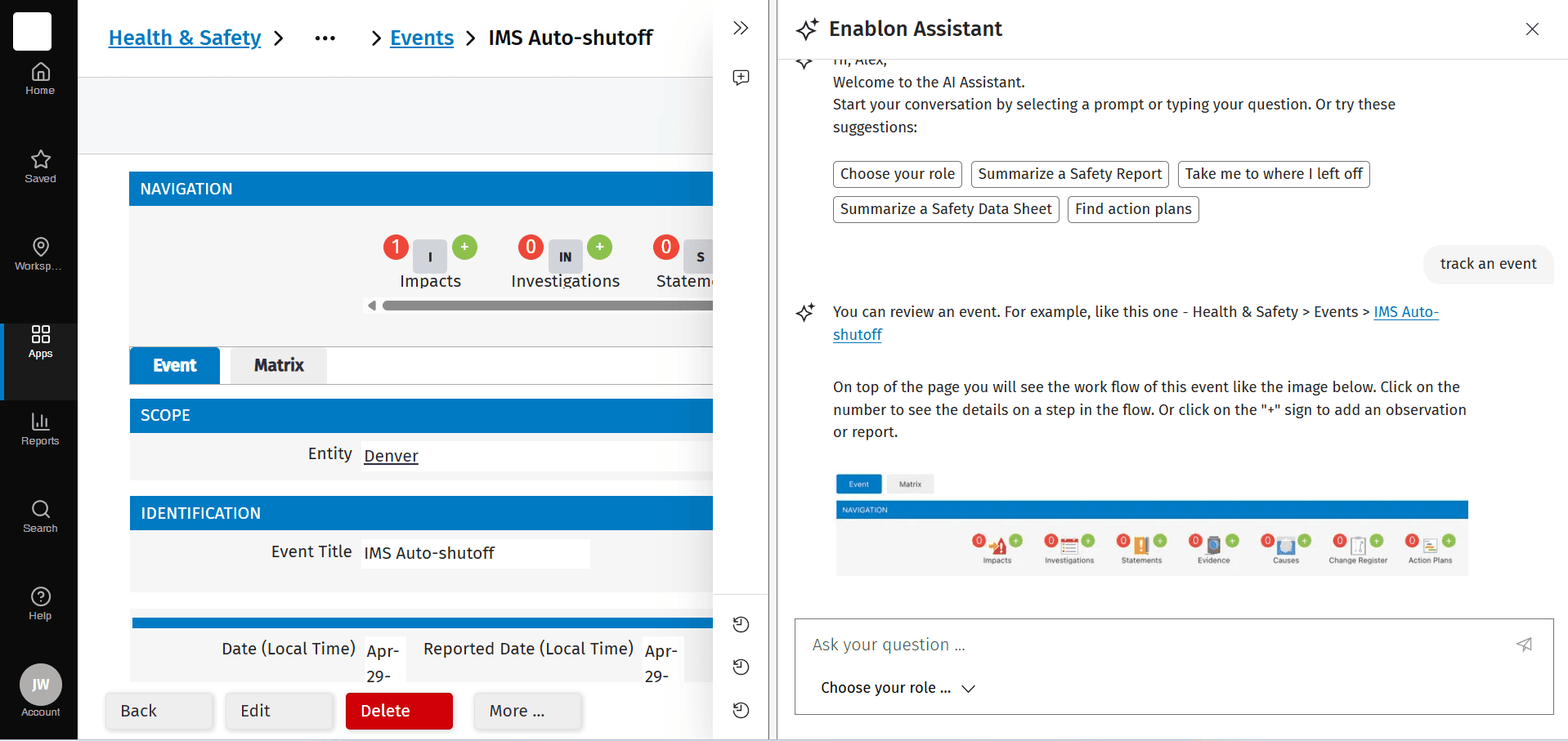
I designed a natural language navigation system that:
Interprets user intent from conversational queries ("go to," "create," "search")
Maps requests to specific Enablon URLs.
Uses hierarchical paths, e.g. breadcrumbs, URL
Respects user permissions and maintains context for follow-up questions
“The assistant as a platform-wide agent, I can go and ask a question without referring to documentation or anything to get to where I need to go.“
Gary T.
Global Head of HSEE System, SATS Ltd.
Impacts
Shifting Enterprise Interaction from Mechanical to Dynamic
Roadmap
Early testing shows strong satisfaction and time saving by metrics.
Scalability
Establishing a design framework for future "augmented search" and hybrid AI services.
Proactive Paradigms
Moved from rigid, deterministic flows into engaging, dynamic, proactive experiences.
Designing for Uncertainty
Built robust fallback mechanisms and error states to manage unpredictable AI output.